On Being Real (I FELT your pain)
Posted by: • Date:

So many things are on my mind that I’d like to talk about. My brain is not cooperating though. It is as if there is a Ticker Tape Parade going on in my head with shredded gray matter instead of paper. (Oh, Yuck!) Hopefully in the next day or two my brain fog shall lift and my tongue become untied and I shall have all kinds of intellectual crap (er, wonderful things) to share with y’all. In the meantime, I’m going to let some other folks talk for me, as they seem to know what’s in my heart and mind. And then it’s off to some brand new FELTED Freebies I’ve made for you. Enjoy!

“Generally, by the time you are Real, most of your hair been loved off, and your eyes drop out and you get loose in the joints and very shabby. But these things don’t matter at all, because once you are Real you can’t be ugly, except to people who don’t understand.”

– Margery Williams (Bianco) Author, (1881-1944), from “The Velveteen Rabbit”

• • •

“Three passions have governed my life: 
The longings for love, the search for knowledge, 
And unbearable pity for the suffering of [humankind].
Love brings ecstasy and relieves loneliness. 
In the union of love I have seen 
In a mystic miniature the prefiguring vision 
Of the heavens that saints and poets have imagined.
With equal passion I have sought knowledge. 
I have wished to understand the hearts of [people]. 
I have wished to know why the stars shine.
Love and knowledge led upwards to the heavens, 
But always pity brought me back to earth; 
Cries of pain reverberated in my heart 
Of children in famine, of victims tortured 
And of old people left helpless. 
I long to alleviate the evil, but I cannot, 
And I too suffer.
This has been my life; I found it worth living.”

Bertrand Russell, 3rd Earl Russell, OM FRS, (1872-1970,) Nobel Prize Winner (1950), philosopher, Mathematician, Historian, Socialist, Pacifist, Social Critic”

Free Icons of the Day

The following images are either full or reduced size previews. Simply right-click (or control-click) on the preview to save the image(s) of your choice to your desktop. (Unless otherwise noted, downloads are 512px X 512px in .png format). As always, usage of any of the images offered on this blog are free for your personal use while subject to the limitations of my Creative Commons Non-Commercial – Attribution – No Derivatives – Share Alike- 3.0 license. (See sidebar for details))

Felted-Linux

Felted-Apple-2 Felted-Windoz

Felted-Developer

Felted-Mail Felted-Gmail

Felted-Finder

Felted-Package Felted-Document

Felted-Home

Felted-Desktop Felted-Alias

Felted-App

Felted-Cliip-Pix Felted-Clip-Snd

Felted-Clip-Text Felted-Clips-Generic

Reaching Justice

Posted by: • Date:

The USA’s Founding Fathers were neither the mythically pure characters symbolized by the old cherry tree legend nor the evil black-hearts epitomized by more recent revelations concerning siring children with slaves. Instead, they were each fiercely independent, intelligent, and complex people who, together, did the seemingly impossible: negotiated a settlement on wording for a national Constitution that began with two dichotomous assumptions, (1) that all people have the ability to choose to live objectively honorable lives; and (2) recognizing that not everyone will make honorable choices. Just as it is with wise parents, George Washington, Thomas Jefferson, et al knew that setting oppressive policies for ALL citizens would guarantee that NO citizen could ever become a victim to many of the most common types of harm that occur in less restrictive societies. At the same time, they also realized the negative factors of subjecting a country’s citizens to such tight control far outweighed the benefits. For this reason, they sought an alternative solution by taking a cue from God and defined a system that (1) protects every citizen’s right to individually exercise their natural free will; (2) encourages good decisions by awarding citizens in a variety of ways for their good choices; (3) discourages bad decisions by imposing negative consequences on the person(s) whose choices cause harm to others; and (4) provides means for victims to recover in some way and to some extent, that which they’d been deprived of by the wrongdoer.

The theory behind this system of justice was absolutely brilliant and admirable. Unfortunately, just like the adduced advantages of God-given free will failed to enable mankind (as a whole) to learn from the poor decisions of others and evolve to the point where we no longer make bad decisions, the US Constitution and justice system have failed to eliminate crime and have likewise been unable to guarantee that every victim will even be recognized as such, much less fairly compensated for the harm they’ve suffered. Not being privy to God’s intentions, we can only surmise whether free will has worked as He originally intended or whether the “Groundhog’s Day-effect” of every human-being starting from scratch upon their own birth was an unintended consequence of the fact our intellectual and emotional experiences are only saved to a single-lifetime Virtual RAM disk rather than to a shared public “ROM” that’s large enough to accumulate every conscious and unconscious memory from each and every previous generation.

Despite this short-coming, we have nevertheless learned to accept those limitations without feeling overtly frustrated or disillusioned. In contrast, frustration, disillusionment, or even harsher emotions are all too often the reaction of many Americans who have experienced the realities of our judicial system in practice. I suspect this is not only because victims who’ve turned to that system looking for protection and justice often end up suffering even greater harm despite the built-in safeguards because those with the authority to enforce the rules failed to do so for one reason or another. Worse yet, is how often victims find themselves forced to bear a grossly disproportionate share of the negative consequences brought on by the wrong-doers’ bad acts while the real law-breaker gets to walk away relatively unscathed.

So does this means our Founding Fathers screwed-up or that our judicial system is inherently and irrevocably unjust? Personally, I don’t believe those conclusions are supportable. Accepting that no human-designed system (be it a system of justice or of anything else) can ever be expected to always work perfectly, I believe that the core presumptions, goals, and theories underlying the system of the US Constitution, laws, rules, adjudication, enforcement and remedies offers the best opportunity to make sure there is an absence of complete chaos and an absence of total oppression, all while still affording the greatest amount of individual freedom possible for all those who choose to live in any society where they are not the sole member. But Ideals and theories aside, I certainly know first hand how wretchedly our system can fail when victims are ignorant of the possible pitfalls or are otherwise powerless to avoid those pitfalls when the “The Powers That Be” (i.e. police, lawyers, judges, etc.) make poor decisions of their own which, intentionally or unintentionally and end up failing to protect the innocent and award the guilty instead.

The good news is that there IS a solution. The bad news is that the degree of success it can achieve is solely dependent upon the proportion of individuals from both sectors of our society (meaning those who are members of “the powers that be” and those who are not) that make a solemn commitment to simply and at all times, in all circumstances, live by The Golden Rule. All that is required to make our system of justice functional is to have a greater percentage of our population with the will to make such a promise and the guts and integrity to ensure that rule serves as the final, inner governor of every decision they make. What’s required to improve our system is merely a matter of changing the existing ratio to increase the number of those who are committed to giving more than lip-service to The Golden Rule. Sounds too simplistic to you? It’s simple, yes, but that doesn’t mean it’s not do-able. But don’t just take my word for it. Test my theory out by committing yourself to…

Always

Do Unto Others

As You Would Have Them

Do Unto You

and by holding others accountable with your voice and your votes. To borrow and append a political campaign phrase (coined by the party not of my choice),

One person and one step at a time,

Together, We Can Do It!

Free Icons of the Day

The following images are either full or reduced size previews. Simply right-click (or control-click) on the preview to save the image(s) of your choice to your desktop. (Unless otherwise noted, downloads are 512px X 512px in .png format). Create Commons license applies (see sidebar for details)

Add to FacebookAdd to DiggAdd to Del.icio.usAdd to StumbleuponAdd to RedditAdd to BlinklistAdd to TwitterAdd to TechnoratiAdd to Yahoo BuzzAdd to Newsvine

Situational Truth? Humbug! (+ Law-Related Icons)

Posted by: • Date:

I was once told (by a lawyer, no less) that there is no such thing as the truth but rather that “truth” is always “situational”. That attorney was by no means alone in that opinion and perhaps may even be in the majority with that view but I have to respectfully and vehemently disagree. I personally believe that those who advocate “situational truth” and “situational ethics” are confusing truth and ethics with what are merely artificially narrow points of view stubbornly clung to as self-justification for thoughts, beliefs, and/or actions which they realize, consciously or unconsciously, would fail under objective scrutiny. To such proponents, truth is a collection of facts and pseudo-facts arranged in a manner to produce that which conveniently relieves them of moral and/or actual liability for the consequences of their choices.

My criticism of “Situational Truth” does not mean that I fail to recognize that everyone views events from their personal frame of reference and that more than one view can often and even simultaneously be valid. Nor does it mean that I see life in terms of black and white without any shades of gray. The problem, as I see it, arises when someone places validation of their internal emotional needs as the final arbiter of what is “true” regardless of any objective analysis of irrefutable – but external – hard facts and evidence. To me, truth is truth whether we like it or not. Shades of gray only apply to and only exist when we have competing interests to consider when deciding how we want to think and act in response to the truth. While there are times when there is no one “right” answer and times when there isn’t even any “good” answer, denying the existence of the truth is never a valid option.

Seems like I’m in pretty good company on this issue, as the following quotes attest to. What are your thoughts?

“The truth is incontrovertible, malice may attack it, ignorance may deride it, but in the end; there it is.”
Winston Churchill (British Orator, Author and Prime Minister during World War II. 1874-1965).

“Fraud and falsehood only dread examination. Truth invites it.”
Samuel Johnson (English Poet, Critic and Writer. 1709-1784).

“It is not the oath that makes us believe the man, but the man the oath”
Aeschylus (Ancient Greek Dramatist and Playwright known as the founder of Greek tragedy, 525 BC-456 BC).

“Truth is like the sun. You can shut it out for a time, but it ain’t goin’ away.”
Elvis Presley (American Singer and Actor widely known as the “King of Rock and Roll”, 1935-1977).

“If you look for truth, you may find comfort in the end; if you look for comfort you will not get either comfort or truth only soft soap and wishful thinking to begin, and in the end, despair.”
C.S. Lewis (British Scholar and Novelist. 1898-1963).

“It’s no wonder that truth is stranger than fiction. Fiction has to make sense.”
Mark Twain (American Humorist, Writer and Lecturer. 1835-1910).

“Remember that all through history the way of truth and love has always won. There have been tyrants and murderers and for a time they seem invincible but in the end, they always fall — think of it, ALWAYS.”
Mahatma Gandhi (Indian Philosopher, internationally esteemed for his doctrine of nonviolent protest, 1869-1948).

And now, for tonight’s freebie clip-art and icons, a few more to serve the legal community’s needs. Enjoy!

Free Icons of the Day

The following images are either full or reduced size previews. Simply right-click (or control-click) on the preview to save the full-sized image file to your desktop. Each image is 512px X 512px in .png format unless otherwise indicated in caption below image.

Justice

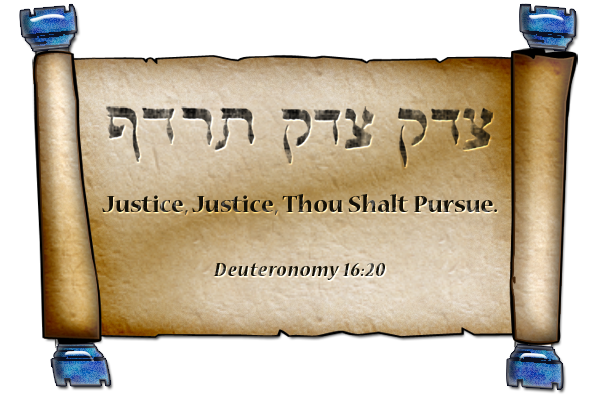
Justice (download size is 600 x396 px - useful for banners & headers)

Oath-color Oath

Contract-signed-in-blood

Add to FacebookAdd to DiggAdd to Del.icio.usAdd to StumbleuponAdd to RedditAdd to BlinklistAdd to TwitterAdd to TechnoratiAdd to Yahoo BuzzAdd to Newsvine